introduction: deploying vps in malaysia has become a common choice for enterprises and developers. starting from latency and bandwidth, combined with factors such as packet loss, geographical location and configuration, this article analyzes the actual impact of vps in malaysia on websites, applications and real-time services, helping readers make decisions and optimization solutions that are more in line with local business needs.
latency determines the time between request and response, which is especially critical for highly interactive applications. vps located in malaysia can significantly reduce the round trip time (rtt) for local users and improve the smoothness of page loading, api response and online collaboration tools. however, cross-border access or cross-ocean links will still be affected by international transit delays, which need to be alleviated through nearby deployment or cdn.
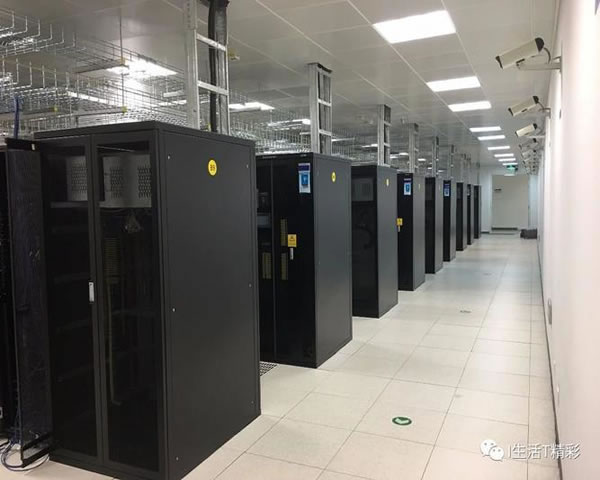
bandwidth determines the amount of data that can be transmitted per unit time, which directly affects the concurrent processing capabilities of file downloads, video streaming, and large-traffic apis. if a malaysian vps provides stable uplink and downlink bandwidth, it can ensure continuous throughput in high-concurrency scenarios. however, when the bandwidth is saturated, it will lead to queue backlog and increased delay. bandwidth resources and load balancing need to be reasonably planned according to business traffic.
packet loss will lead to retransmissions, delay jitter, and reduced protocol efficiency, which has a particularly obvious impact on real-time voice, video calls, and online games. when choosing a malaysian vps, you should pay attention to the packet loss rate and jitter performance of the bearer network, and reduce the negative impact of packet loss on the business through link quality monitoring, redundant paths or fec to ensure service availability and user satisfaction.
geographical location determines physical distance and routing hop count, affecting latency and reliability. for services targeting users in malaysia and southeast asia, choosing a vps in a local or nearby region can result in lower latency and shorter routing paths. in addition, evaluating the supplier's upstream bandwidth provider and submarine cable access can help determine network performance during cross-border access.
the virtualization layer, network card type (virtio/ena), cpu and memory resources will all affect network performance. highly io-intensive applications need to give priority to instances that support sr-iov or optimize network drivers, and at the same time reasonably configure the kernel network parameters and connection limit to achieve stable and scalable network throughput and low-latency performance on malaysian vps .
static websites and content can achieve significant performance improvements through cdn and caching; databases and api servers are sensitive to latency and require local deployment; real-time communications and games have higher requirements on latency and jitter, requiring high-quality links and low packet loss rates. choosing appropriate vps specifications and network strategies based on application types is the key to improving user experience.
it is recommended to implement continuous network monitoring (delay, packet loss, bandwidth utilization), establish sla indicators and perform regular stress testing. at the same time, cdn, load balancing and multi-region deployment are used to reduce single point risks, and bandwidth and instance specifications are adjusted according to actual traffic. deploy link redundancy and automatic failover for key services to improve the stability and availability of local and cross-border access in malaysia.
summary: vps in malaysia can significantly reduce latency and improve bandwidth experience in localized services, but the impact of packet loss, geographical topology and instance configuration needs to be considered comprehensively. it is recommended to conduct network assessment and small-scale testing first, customize bandwidth and delay optimization strategies according to application types, and combine monitoring and redundancy mechanisms to ensure that network applications achieve expected performance and stability in malaysian operations.
- Latest articles
- A Practical Guide Teaches You Common Testing Methods To Verify Whether Hong Kong Server Clusters Are Exclusive
- Contract Considerations: Caution Is Needed When Choosing Ranked Vendors For US Server Rentals
- Best Practices For SMEs Using Cambodia CN2 Return-to-China Servers To Reduce Latency Costs
- Common Troubleshooting Steps And Rapid Recovery Solutions For Taiwan Telecom CN2 Broadband
- An Automated Operations And Maintenance Solution Covering Everything From Development To Monitoring How To Build A Site On Hong Kong Cloud Servers
- From A Business Perspective, Is Vietnam's VPS Reliable? Considerations Regarding Compliance And Data Security
- Free Server Korea Security Protection Policy And Backup Implementation Guide
- Cost And Operation Management Recommendations For Enterprises Deploying Korean CN2 Site Cluster Cloud Servers
- Basic Information On Taiwan Proxy Servers, Common Terminology Explanations, And Purchase Precautions
- How To Choose A Cloud Server In Thailand: From Network Latency To After-sales Service, Comprehensive Aspects
- Popular tags
-

How To Choose Cheap VPS In Malaysia To Save Money And Be Efficient
This article will provide you with a practical guide to choosing cheap VPS in Malaysia, allowing you to operate efficiently while saving costs. -

Application And Case Studies Of Huawei Cloud Server In Malaysia
this article discusses the application and case studies of huawei cloud servers in malaysia, and analyzes its practical applications and effects in various industries. -

Security First: Key Points In Network And Permission Settings When Building A Malaysian Cloud Server
overview of the key points of network and permission settings during the establishment of malaysian cloud servers, including network segmentation, firewalls, vpn access, the principle of least privilege and audit strategies, to help improve the security of online and operation and maintenance.